Korean menswear spent a decade telling you exactly how much it cost. This year it stopped — and started performing something harder to fake.
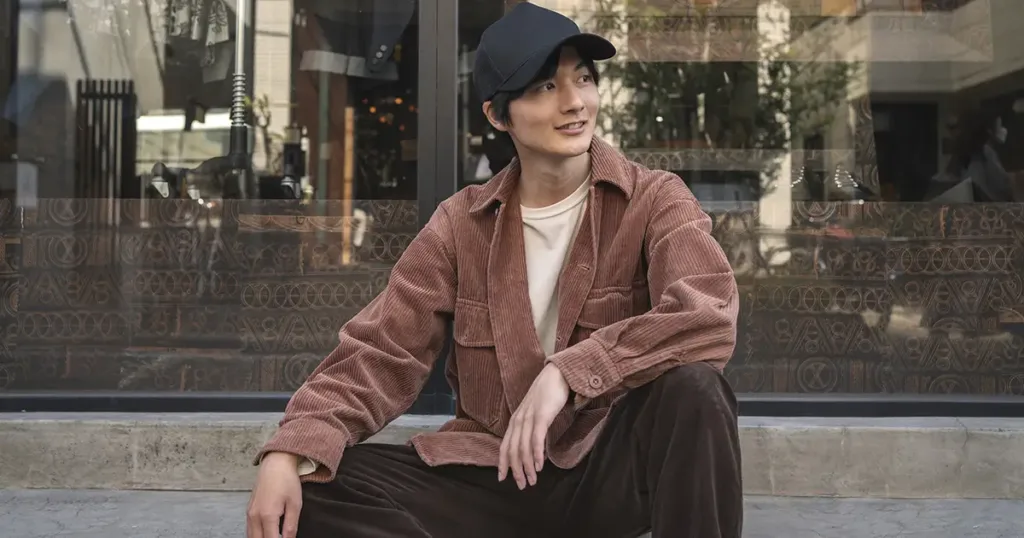
Walk through Seongsu — the industrial-turned-fashion district in eastern Seoul, all converted warehouses and coffee roasteries — on a Saturday afternoon and count the logos. Not many, for a neighborhood that a decade ago was Supreme box logos and Fendi monogram belt bags stacked three deep outside every flagship opening. What you’ll see instead is a half-zip in a color that doesn’t have a name, a pair of desert boots the color of wet sand, a cardigan that looks like it was owned by someone’s father first. Nothing declares its price. That’s the point.
Three menswear directions are converging on Korean runways and Korean streets right now, and they look, at first, like unrelated microtrends — the kind of thing a trend report invents a name for and nobody remembers by autumn. They’re not unrelated. Poet core, granola core, and what’s being called comfort classic are three costumes for the same underlying decision: dress like you have nothing left to prove.
The end of the logo as language
For most of the 2010s, Korean menswear — like menswear everywhere touched by streetwear economics — spoke in one dialect. A logo was a receipt. It told the street exactly what you’d paid and, more importantly, that you could afford to pay it visibly. The bigger the mark, the louder the sentence. Supreme, Fendi, Off-White, Balenciaga — the message was never really about the garment. It was about proof.
That grammar is fading, and not because taste got better. It’s fading because the flex stopped working. Everyone had access to the same drops, the same resale apps, the same box logo. When anyone can buy the receipt, the receipt stops meaning anything. What replaced it is harder to counterfeit: restraint that only reads as intentional if you already know what you’re looking at.
Three names for the same idea
Jonathan Anderson’s first menswear collection for Dior — shown June 27, 2025 in Paris as the Spring/Summer 2026 collection, and widely covered by Korean fashion press as the season’s reference point — is as good a place as any to see the shift in motion. Striped shirts and ties worn loose over cargo shorts, over raw denim, finished with mid-top sneakers instead of anything resembling a dress shoe. Suede desert boots standing in for the oxford. Preppy signifiers — the tie, the striped shirt — present but deliberately undone, worn like they’d been slept in on purpose. A$AP Rocky, joined by Rihanna, put his own spin on it: a sky-blue button-up with a clashing neon tie, worn with plain blue jeans and a small furry beige bag that looked assembled from loose tassels — formalwear pieces present, but none of them behaving.
That’s comfort classic: tailoring’s vocabulary, spoken with none of tailoring’s posture.
Poet core runs a parallel track — softer, more literary, closer to Hugh Grant circa Notting Hill than to anything on a runway thirty years ago: loose knits, corduroy, a cardigan that looks inherited rather than bought, a general air of a man who reads and doesn’t mention it. It’s the same refusal wearing a different coat. Where comfort classic undoes tailoring, poet core skips the performance of formality altogether and reaches for something that looks lived-in from the day you buy it.
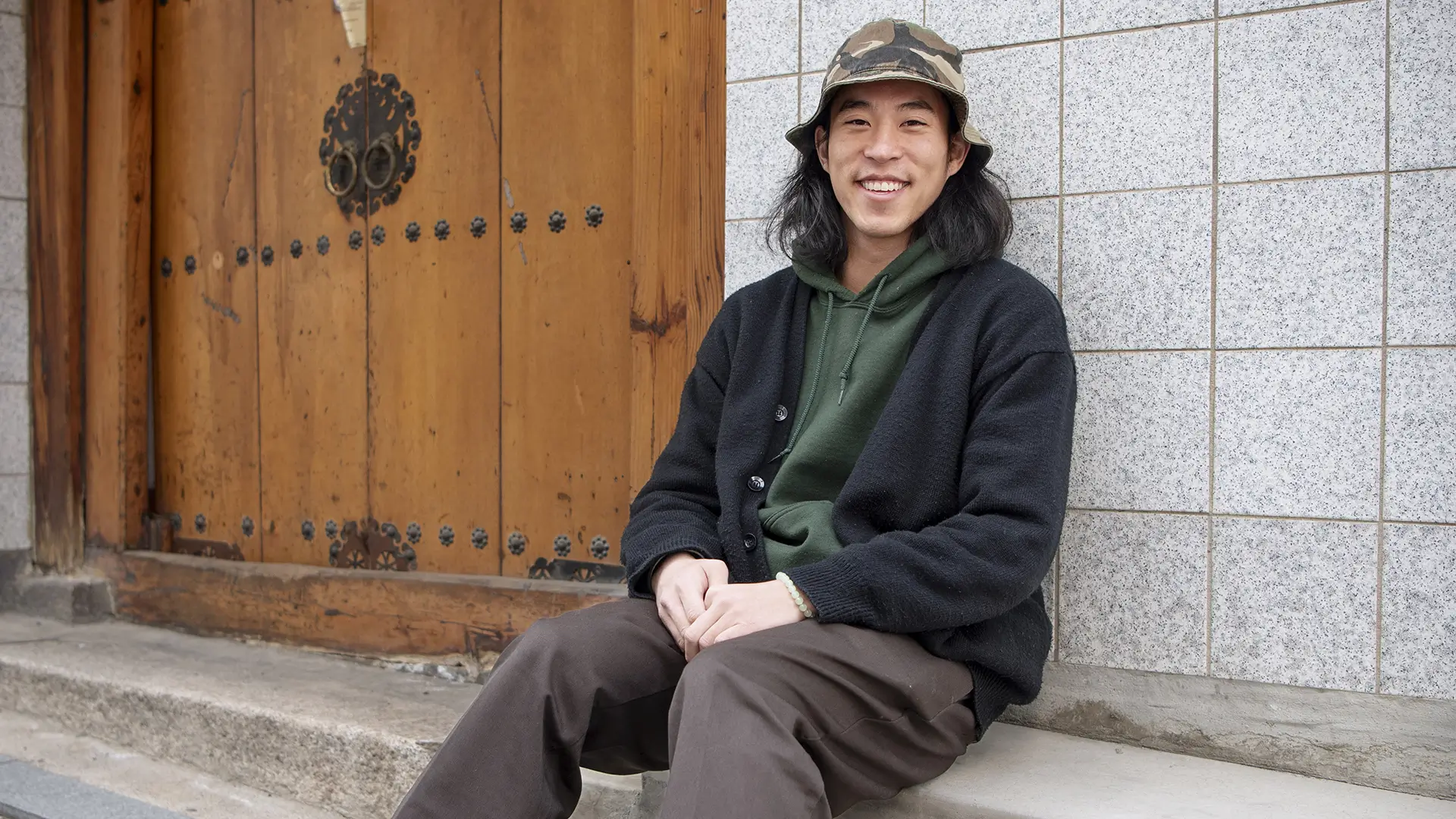
Granola core is the outdoor cousin: fleece textures, an olive-and-beige palette lifted straight from a hiking trail, half-zips and technical trousers worn with no irony and no actual hiking planned. It rides on the back of camping and hiking becoming default leisure activities for a generation of Korean men who spent their twenties inside. The techwear moment that preceded it was still about proof — Arc’teryx price tags, GORE-TEX as a flex in its own right. Granola core keeps the silhouette and drops the price flex. The point isn’t that the jacket cost a lot. The point is that you look like you might actually go somewhere in it.
Put the three side by side and the family resemblance is obvious: soft materials, undone formality, palettes borrowed from nature instead of brand books, and a studied absence of anything that reads as effort. Nobody in any of these outfits is trying to look rich. They’re trying to look like they stopped needing to.
The market already diagnosed this
This isn’t just runway abstraction — Samsung’s own fashion research arm reached a version of the same conclusion in its 2026 market outlook, published under the “WILLOW” framework in January. Their argument, stripped of the branding around it: where a logo once served as a primary marker of consumer identity, Korean consumers are increasingly favoring brands that reflect personal taste, values, and lifestyle instead — and brands with clear positioning and distinctive storytelling are gaining traction regardless of scale. Samsung C&T’s own fashion group has been responding to that shift by expanding a portfolio of smaller, narrative-driven labels — SAND SOUND, The Aperture, anggae — now in their second or third year and growing fastest through online channels. That’s a research institute confirming from inside its own business what the runway had already decided: legibility through logo is losing ground to legibility through taste.
Which raises the obvious problem with the whole story.
The performance didn’t disappear. It got quieter.
Comfort-coded dressing is not the end of status signaling in Korean menswear. It’s status signaling for people who’ve gotten embarrassed by the old version.
A cardigan that looks inherited from your father can cost more than the logo hoodie it replaced — sometimes considerably more, once you’re paying for the specific weight of wool, the specific mill, the label few people outside a narrow circle would recognize. The desert boot instead of the oxford isn’t a democratization of taste. It’s a different, better-defended kind of exclusivity — one that requires cultural fluency instead of just cash, which is a harder thing to fake and a much harder thing to buy your way into quickly. You can’t rush your way to knowing which unmarked fleece is the right unmarked fleece. That takes time, attention, and usually someone to tell you — which is precisely the gatekeeping function logos used to perform loudly and this aesthetic now performs in a whisper.
So the real story isn’t that Korean men stopped trying. It’s that trying stopped looking like trying.
The flex moved from your chest to your fluency — from what you’re wearing to what you clearly know. That’s arguably a worse trap than the logo ever was, because at least a logo was honest about the game it was playing.
Where to actually see it, from outside Korea
None of this requires a trip to buy into. Musinsa’s international storefront ships worldwide and carries most of the domestic labels working in this register — search by the aesthetic rather than a brand name if you don’t already have one in mind, since a lot of the relevant pieces come from smaller houses without global name recognition yet. 29CM and W Concept both run international shipping and lean toward exactly this kind of quieter, narrative-driven label over big-logo streetwear, which makes either a better starting point than Musinsa’s main site if you’re specifically chasing the comfort-classic or poet-core end of this rather than sneakers and streetwear.
If you want names rather than aesthetics: Kijun and Wooyoungmi have both built entire identities around soft, undone tailoring long before this became a runway-wide direction, and either is a reasonable place to start looking. Kijun is available through Musinsa’s global site, which ships internationally. Wooyoungmi ships internationally for free direct from its own site. Though as of this writing, the brand has a notice up that shipping to the US will be suspended starting November 1 over tariff issues, so US-based readers should order sooner rather than later if there’s a specific piece in mind.
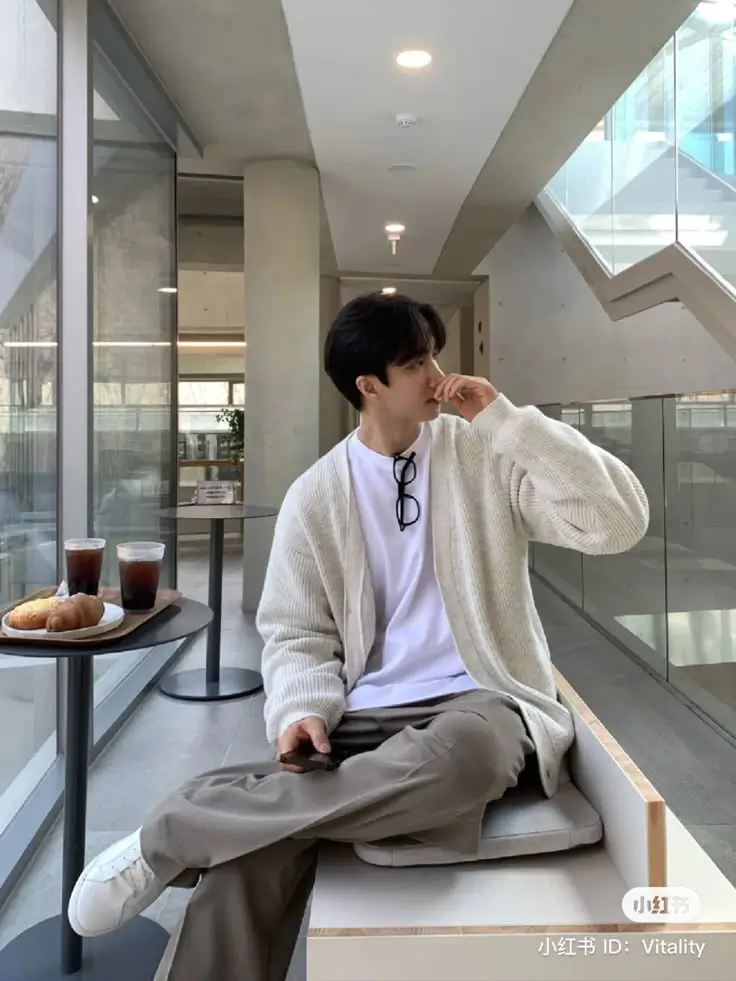
The desert boot over the oxford, the unmarked half-zip, the cardigan that looks borrowed — none of it photographs as dramatically as a box logo did. It isn’t supposed to. It’s supposed to make you look twice, and then make you feel slightly behind for needing to.
